
Sleep Lab · Support & sleep position · 5 min read
Why does my arm go numb when I sleep on my side?
It usually isn't the arm — it's the shoulder. On a normal pillow the shoulder gets pushed up and bent, the arm carries weight all night, and circulation drops until the hand goes quiet. Change the shoulder's position and the numbness usually changes with it.
What do people actually say?
This is one of the most repeated complaints in side-sleeper reviews and forums. Two recent examples:
My arm goes numb every single night. I wake up and it's dead, and I have to roll onto my back until it wakes up.Reddit r/sleep · 2026-03 · user withheld · source
Woke up 4–5 times a night with a dead arm. Tried three pillows. All rectangle, all same problem.Amazon review — side sleeper pillow category · 2026-01 · verified purchase · source
A side sleeper's shoulder is wider than the head. When both rest on the same flat surface, one of two things gives: the neck bends toward the mattress, or the shoulder is pushed up into the pillow. Either way, the muscles between the neck and shoulder stay loaded, and the arm below carries pressure it was never meant to carry for eight hours.
Pressure on the shoulder doesn't just feel bad locally — it changes the whole sleeping posture. People compensate by rolling back, tucking the arm under the pillow, or dropping the top shoulder forward. All three trade the numb arm for a new problem: neck twist, shoulder impingement, or a lower back that wakes up angry.
Occasional numbness that fades within a minute of moving is positional and common. Numbness that persists during the day, or weakness that doesn't fade, is not a pillow problem — see a doctor. Nothing on this site is medical advice.
What can you try tonight (no purchase needed)?
- Check the shoulder line. Lie on your side in front of a mirror. If your neck tilts down toward the mattress, the pillow is too low for your shoulder width — fold a towel under it and test again.
- Give the arm a lane. Slide the bottom arm down along your side instead of under the pillow. Under-pillow tucking bends the shoulder into exactly the position that causes the numbness.
- Hug a small cushion with the top arm to stop the top shoulder from rolling forward and loading the bottom one.
How did we design around it?
Every fix above is a workaround for one missing feature: a place for the shoulder to go. That's the whole idea behind the shape of AERÉ Curve.
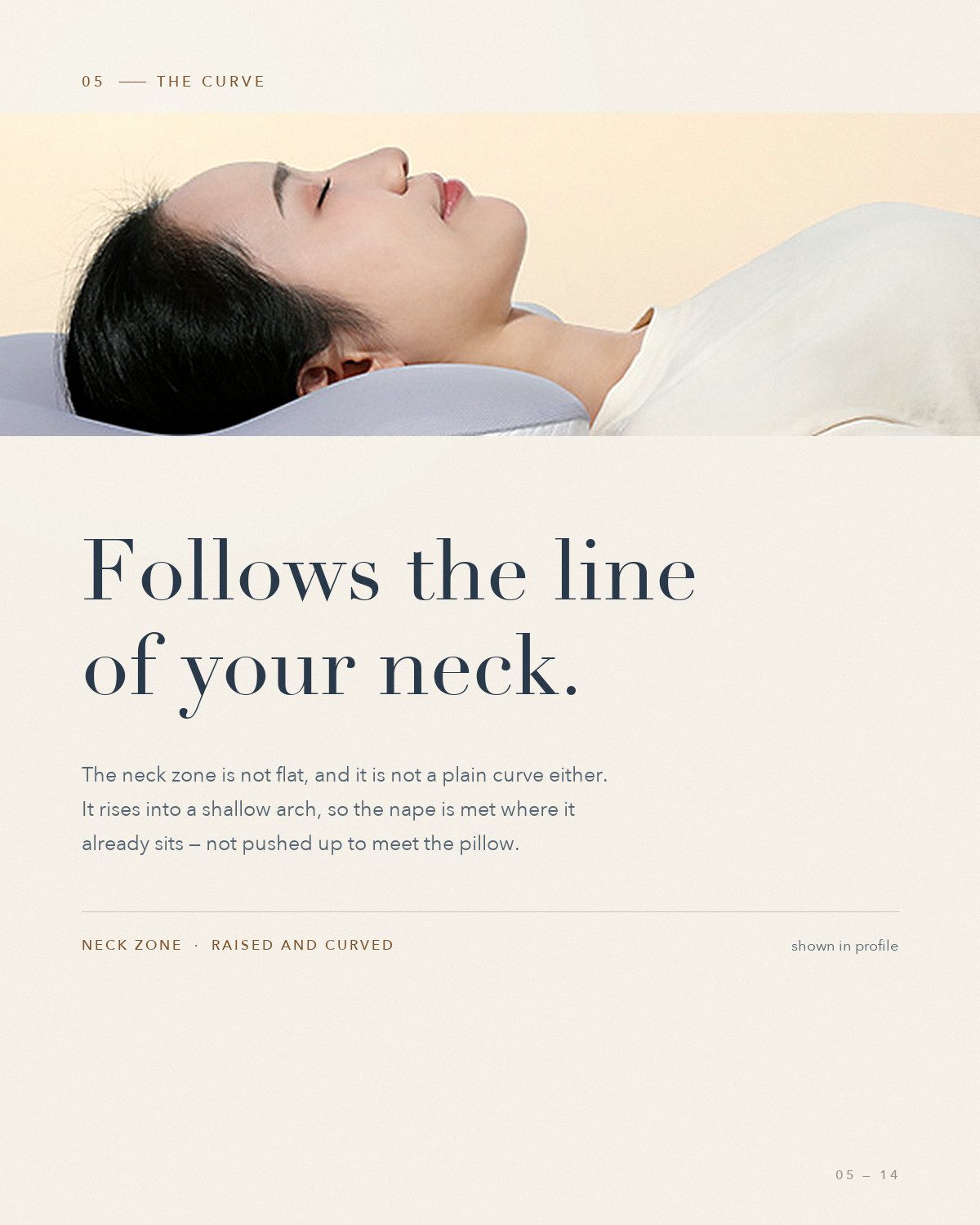 AERÉ Curve
A butterfly-shaped memory foam pillow with two shoulder notches and two heights in one. $79.00.
Questions people ask next
Numbness that fades within a minute of moving is positional and common. If it persists during the day, or comes with weakness that doesn't fade, that's not a pillow question — see a doctor.
Loft follows shoulder width more than body height. Check it lying down: if your neck tilts toward the mattress the pillow is too low, if it tilts toward the ceiling it is too high. One pillow with two built-in heights — 95 mm at the rim, 85 mm in the centre — lets most side sleepers land somewhere workable without buying twice.
Firmness only helps if the shape is right first. A firm rectangular pillow still pushes the shoulder up — it just pushes harder. Shape first, then firmness.