Sleep Lab · Support & sleep position · 5 min read
Does a butterfly pillow work for back sleepers?
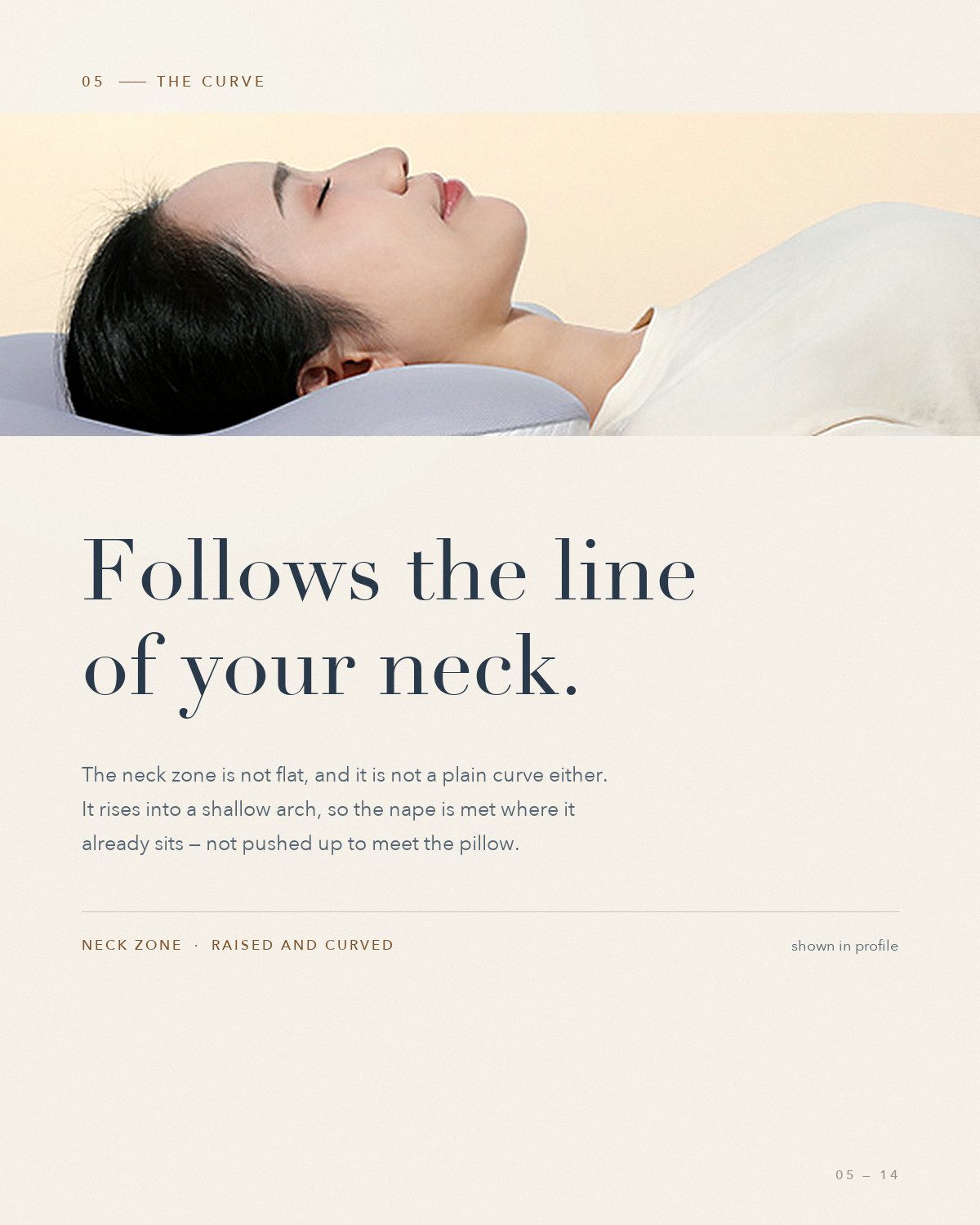
Yes — but you are buying the middle of it, not the wings. A butterfly shape is a way of carrying two heights in one piece of foam, and back sleeping uses the lower one.
Why do the two positions need two different gaps?
Back sleeping asks for a shallower gap than side sleeping. Lying face up, the back of your head sits close to the mattress and the hollow at your neck needs filling rather than lifting. Roll onto your side and the gap changes entirely: it is now set by how wide your shoulder is, and it is a good deal deeper. One flat pillow is being asked to be two different heights at once, which is why so many people end up folding it, bunching it, or sleeping on the edge of it.
What is the shape actually doing?
A butterfly outline is a way of building both heights into one piece of foam. The raised outer rim takes the deeper side-sleeping gap, and the notches cut into the sides give your shoulder somewhere to sit instead of being pushed up. The lower centre is the part a back sleeper uses: your head settles into it and the hollow at the neck is supported rather than propped.
That is also the honest limitation. If you sleep on your back all night you are using the middle of the pillow and the wings are doing nothing for you. What you are really paying for is the half of the night you spend on your side, and for not having to get up and change pillows at 2am.
Who does it not suit?
If you sleep face down, we would tell you not to buy it. A contoured pillow holds the head higher than a stomach sleeper wants, and a flat, lower pillow is the straightforward answer for that position. We would rather say that on the page than sell you a shape you fight for two weeks and then send back.
How do you test it in three nights?
- Lie face up and look at your chin. If it is angled down toward your chest the pillow is too high for you. If your head tips back and the neck feels unsupported, it is too low.
- Slide a hand under your neck. You want contact, not a gap you could drop a fist into, and not pressure that lifts your head off the surface.
- Roll onto your side without re-fluffing. The rim should meet your shoulder, not your neck. If you have to bunch the pillow to make that work, the shape is wrong for your shoulder width.
- Judge it on night three. A contour feels unfamiliar for roughly two nights. Anything shorter measures surprise rather than fit.
Where does Curve fit?
 AERÉ Curve
A butterfly-shaped memory foam pillow with two shoulder notches and two heights in one. $79.00.
About AERÉ
AERÉ is a sleep and everyday-wellness home brand based in Hangzhou, China, designing twenty things for the hour before bed.
Questions people ask next
You can, and it will work as a low contour. But you would be paying for shoulder notches you never use — a plain pillow at the right height is the more honest buy.
Only when you are on your side. Face up, the lower centre is the part doing the work.
Lie on your back and look at your chin. If it angles toward your chest, use the lower centre or a lower pillow. Decide after three nights, not on the first.